WRX Generations & Fitment Guide: GD, GR, VA & VB by Year
Which Subaru WRX do you have? A no-nonsense breakdown of every WRX generation — GD, GR, VA, VB — by year, engine, and chassis code, so you buy parts that actually fit the first time.
Recommended Parts for This Guide
Aero and personalization
Subaru WRX owners
Subaru WRX owners
| # | Product | Owner Reviews | Availability | Best For | |
|---|---|---|---|---|---|
| 1 | 2 | $20.88 In Stock at Amazon | Aero and personalization | Buy on Amazon
Prime Eligible
| |
| 2 | 12,653 | $36.99 In Stock at Amazon | Subaru WRX owners | Buy on Amazon
Prime Eligible
| |
| 3 | 44 | $32.99 In Stock at Amazon | Subaru WRX owners | Buy on Amazon
Prime Eligible
|
Shopping used or OEM? Try eBay Motors
Live listings for the parts covered in this guide — prices set by the seller.
The single fastest way to waste money on a WRX is to buy a part that fits a WRX — just not yours. Subaru has sold five distinct WRX platforms in the US, each with its own engine, chassis code, and body, and parts rarely cross the generation line (generation years, chassis codes, and engine outputs cross-checked against Wikipedia’s Subaru WRX entry). This guide maps every generation by year so you can match parts with confidence, then points you to the right marketplace: Amazon for new bolt-ons and accessories, eBay Motors for used and OEM parts by generation.
The WRX generations at a glance
| Years | Chassis | Nickname | Engine | Body |
|---|---|---|---|---|
| 2002–2007 | GD/GG | Bugeye / Blobeye / Hawkeye | EJ205 2.0L → EJ255 2.5L turbo | Sedan & wagon |
| 2008–2014 | GR/GV/GE/GH | — | EJ255 2.5L turbo | Sedan & hatch |
| 2015–2021 | VA | — | FA20DIT 2.0L turbo (268 hp) | Sedan |
| 2022–present | VB | — | FA24F 2.4L turbo (271 hp) | Sedan |
There’s also the classic GC (1992–2000) JDM-market WRX — never sold new in the US, but increasingly relevant as 25-year import eligibility opens up. Parts for it are a specialist, eBay-and-import-forum world of their own.
GD (2002–2007) — the one that started it here
The GD is the first WRX Americans could buy new, and it earned the cult status. Enthusiasts split it by facelift:
- 2002–2003 “Bugeye” — round headlights, EJ205 2.0L turbo (227 hp).
- 2004–2005 “Blobeye” — restyled front, still EJ205.
- 2006–2007 “Hawkeye” — swept-back lights, upgraded to the EJ255 2.5L turbo.
The STI arrived for 2004 with the EJ257 and a 6-speed. Because the front-end styling changed three times, lighting, bumpers, and grilles are year-specific — a bugeye headlight won’t fit a hawkeye. This is a used-parts car now, so eBay Motors and the salvage market are where you’ll live. See the lighting and exterior categories for the few new items still made, the LED headlight guide for how to shop the three GD front ends without a fitment mistake, and use the eBay buttons above for OEM GD parts.
GR/GV (2008–2014) — sedan and hatch
The second US generation brought a hatchback body alongside the sedan and standardized on the EJ255 2.5L turbo. Early 2008–2010 cars were softer; the 2011 refresh brought the wider body and more aggressive look many owners prefer. Fitment gotcha: the hatch and sedan differ in rear glass, hatch/trunk, and some rear suspension mounting, so confirm body style, not just year. This generation responds beautifully to suspension and exhaust work.
VA (2015–2021) — the modern used sweet spot
The VA is where the WRX split off onto its own naming and got the FA20DIT — a 2.0L direct-injection turbo making 268 hp. Sedan only. This is the highest-volume used WRX on the road today, which makes it the richest parts ecosystem: a huge aftermarket for intakes and engine bolt-ons, forced-induction upgrades, brakes, wheels, and exterior & aero accessories — the current front lip, spoiler, and side-skirt catalog is cut specifically for this generation. Critically, VA parts do not fit the newer VB — different engine, different platform. When you shop, filter listings to “2015–2021” and you’ll avoid 90% of fitment mistakes. Used and OEM VA parts are strongest on eBay Motors (button above); new bolt-ons are on Amazon.
VB (2022–present) — the current car
The VB rides on the Subaru Global Platform with the FA24F 2.4L turbo (271 hp) and, again, sedan only. It’s new enough that the accessory market is booming while heavy performance hardware is still maturing. Most of what we stock new — door slot mats, window visors, and the wireless charger — is cut for the 2022–2026 VB interior and body. Because the platform and FA24 are unique to this car, treat all VB intake, exhaust, intercooler, and body parts as VB-only and ignore any listing that spans back into VA years.
The three rules that prevent fitment mistakes
- Match the year range, every time. A listing that says “fits 2015–2021” will not fit a 2022 car, no matter how similar it looks.
- WRX ≠ STI. Wheel bolt patterns, brakes, and suspension geometry differ between trims within the same generation — the base WRX is 5x100 all the way through the 2011–2014 widebody car, only reaching 5x114.3 with the VA/VB, while the STI is 5x114.3 from 2005 on. Buy for your exact trim and year: the bolt pattern reference has the year-by-year table, and the wheel & tire fitment guide covers offset and tire sizing before you order.
- Body style matters on the GR/GV era — sedan and hatch parts diverge at the rear.
Where to buy, by generation
- New bolt-ons and accessories (all generations, mostly VA/VB): Amazon Automotive — browse by category.
- Used, OEM, salvage, and rare parts (especially GD, GR, and VA): eBay Motors, via the generation-specific search buttons above.
Confirm your chassis code and engine from the door-jamb sticker before you buy, keep your VIN handy for wheel and brake fitment, and you’ll never pay to ship back a part that was built for someone else’s WRX. Buying used? Each generation also has its own known weak points — the EJ cars’ ringlands and wheel bearings, the FA20’s oil consumption and carbon buildup — so read up on the common WRX problems by generation before you shop. From here, dive into the suspension guide, the brake upgrade guide, or the top performance upgrades for your generation. And because engine family drives the service list — EJ cars run a scheduled timing belt, FA cars a chain — pair this with the WRX maintenance schedule & parts checklist to keep whichever WRX you have healthy.
Shop These Parts

WRX Door Slot Mats for 2022-2026 Subaru WRX Accessories 11PCS/Sets Non-Slip Center Console Liner Mats Compatible with 2022 2023 2024 2025 2026 Subaru WRX Limited/GT(CVT)
2 owner reviews
WRX Door Slot Mats for 2022-2026 Subaru WRX Accessories 11PCS/Sets Non-Slip Center Console Liner Mats Compatible with 2022 2023 2024 2025 2026 Subaru WRX Limited/GT(CVT). Sharpen the look of your WRX with this bolt-on aero and styling upgrade.
- Sharpens the look
- Durable, track-ready build
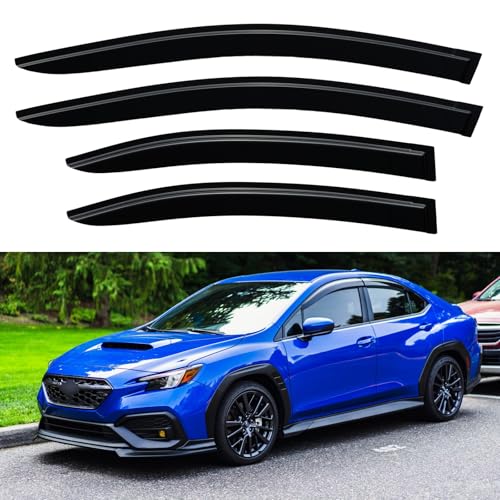
Window Visors Rain Guards for 2022 2023 2024 2025 2026 Subaru WRX | Out-Channel Window Vent Wind Deflectors Visors Shades Protectors for 22 23 24 25 26 Subaru WRX Premium Limited GT
12,653 owner reviews
Window Visors Rain Guards for 2022 2023 2024 2025 2026 Subaru WRX, Out-Channel Window Vent Wind Deflectors Visors Shades for 22 23 24 25 26 Subaru WRX Premium Limited GT. A quality upgrade or replacement part for your Subaru WRX.
- Fits Subaru WRX
- Quality build

for 2022-2026 Subaru WRX 15W Fast Wireless Charger, Car Qi Charging Station Pad Mat fits Subaru WRX Accessories
44 owner reviews
for 2022-2026 Subaru WRX 15W Fast Wireless Charger, Car Qi Charging Station Pad Mat fits Subaru WRX Accessories. A quality upgrade or replacement part for your Subaru WRX.
- Fits Subaru WRX
- Quality build