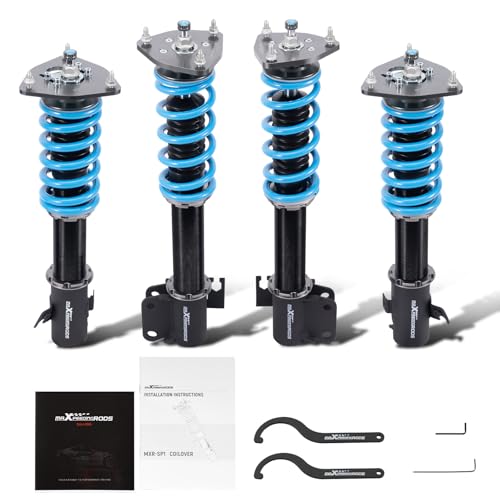
Suspension for the Subaru WRX
Coilovers, lowering springs, sway bars, endlinks, and control arms to dial in your WRX's ride height, stance, and cornering grip — from daily comfort to track-ready setups.
6 parts
What WRX suspension actually covers
Most of what gets sold under the word "suspension" is really four separate jobs: holding the car up, controlling how fast it moves, resisting body roll, and locating the wheel. Working out which of those you are trying to fix is what stops you buying coilovers to cure a clunk.
- Struts and dampers
- Control how fast the suspension moves, not how far. Every WRX is MacPherson strut at the front. Replace in axle pairs, and expect an alignment after front work.
- Springs
- Set ride height and rate. Factory springs sag with age, and lowering springs only work properly with dampers valved for them — stiffer springs on tired struts ride and handle worse, not better.
- Sway bars and endlinks
- Change balance rather than outright grip. A stiffer rear bar is the classic WRX cure for factory understeer. Endlinks are the single most common source of WRX suspension clunk.
- Control arms, lateral links and bushings
- Locate the wheel and hold the alignment. Rear links on 2008-and-newer cars are double-wishbone parts and have nothing in common with the GD's rear strut setup.
- Strut mounts and bearings
- The creak or pop when you turn the wheel at parking speed. Replace them while the struts are already out — the labour is paid for either way.
- Alignment hardware
- Camber bolts at the front, adjustable links at the rear, for when a drop pushes camber past what the factory adjustment can pull back.
Before you buy The 2007/2008 line is a hard rear-suspension boundary. The 2002–2007 GD cars are strut-suspended at the rear; 2008-and-newer cars (GR/GV, VA, VB) use a double wishbone. A listing that claims to fit "Subaru WRX" across both is describing two different cars.